

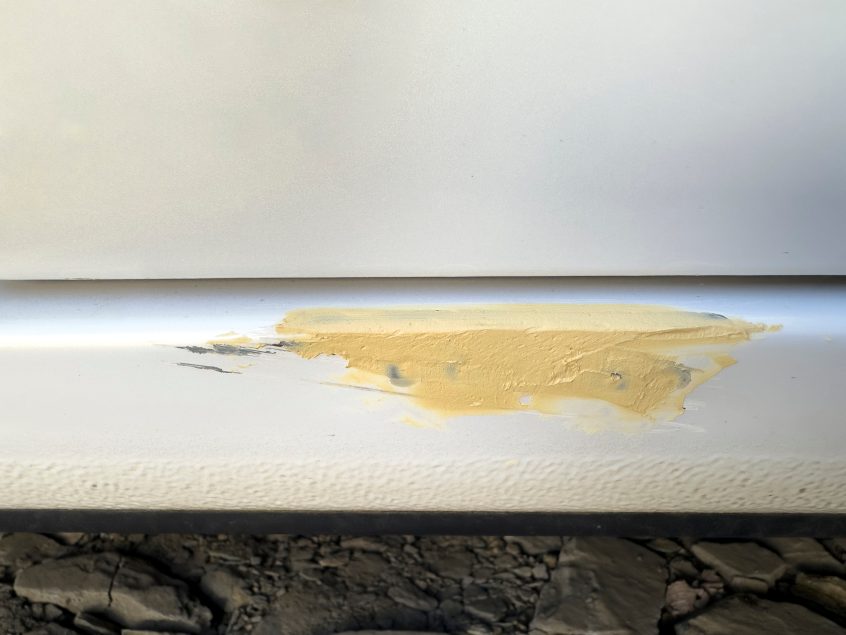
When you see a deep dent, you likely want a fast fix and body filler seems like the easy answer as it smooths the surface and makes the panel look new again. However, if the damage is deep, the real issue sits under the surface and body filler alone doesn’t solve the issue.
Before you choose a repair, you need to understand what body filler actually does and when it can be combined with other methods to achieve the best result for dents repair in Vancouver.
What Is Body Filler and How Does It Work?
Body filler is a paste used to smooth out damaged panels, applied over dents, then sanded it down, and painted over it to restore a clean finish. In plain English, it works by filling low spots and, once it hardens, it creates a flat surface that blends with the rest of the panel.
The goal is simple: Make the damage invisible. But body filler doesn’t restore the metal underneath, it only covers the real problem.
What Body Filler Is Designed to Do (And What It Isn’t)
Body filler is meant for surface damage, which means it works well for:
- Small dents
- Shallow imperfections
- Final smoothing after metal repair
For deeper dents, repair starts by restoring the metal itself. Technicians first use pulling tools and metal flattening methods to return the panel to its original shape, and then apply a thin layer of body filler to refine the surface before painting.
Body filler is not meant to replace metal repair. It is meant to finish it.
Body Filler vs Other Dent Repair Methods
The method depends on how deep the damage goes, once not all dents are the same.
- Paintless dent repair (PDR): A best option for small dents where the paint is intact, where metal is pushed back into place without filler.
- Panel beating and reshaping: In this method, used for deeper dents, the technician pulls and reshapes the metal. After the structure is restored, a thin skim of filler smooths the surface before repainting.
- Panel replacement: Needed when the damage is too serious to repair safely.
Body filler is often part of the process, not the solution on its own. It should follow proper repair, not replace it.
Can Body Filler Fix Deep Dents Permanently?
With everything above being said, the answer is no, body filler alone doesn’t repair a deep dent permanently. However, when combined with proper pulling and metal flattening techniques, it becomes part of a strong and lasting solution.
Deep dents create stress in the metal, and when that stress isn’t corrected, the filler sits on top of movement, breaking down over time. You may not see it right away but months later the surface can sink, crack, or show the outline of the dent again.
The difference isn’t whether filler is used. The difference is how the repair is done before filler is applied. A repair that looks good today can fail later if the real problem isn’t fixed.
Why Body Filler Fails on Deep Dents
These are the most common reasons why fillers fails:
Thickness Limits and Weak Bonding
This material works best in thin layers. When applied too thickly, it loses strength and becomes more likely to separate from the metal underneath. If the deep dents aren’t properly addressed by pulling and flatting the metal, it requires more filler to level the surface. That added thickness weakens the bond and increases the chance of failure.
Flexing, Cracking, and Temperature Changes
Your car’s body expands and contracts with temperature, and it also flexes while driving. Thin layers of filler can handle this movement, but thick layers can’t, especially when dents are left unrepaired. Over time, the filler can:
- Crack
- Shrink
- Pull away from the surface
This leads to visible damage returning, often worse than before.
Hidden Structural Damage Underneath
A deep dent often affects more than what you see: The metal may be stretched or weakened, mounting points or inner panels can also be affected. Body filler doesn’t fix any of this and, even worse, it hides it. If the structure underneath is not repaired, the outer surface will not stay stable.
What Are the Proper Repair Methods for Deep Dents?
Proper repair usually includes:
- Pulling the dent out using specialized tools
- Reshaping the metal to its original form
- Applying a thin layer of filler for final smoothing
- Sanding and repainting for a clean finish
- In some cases, replacing the panel is the safer option
The key is that the structure must be fixed before the surface is refined. That’s what makes the repair last.
Why Choosing a Professional for Dents Repair in Vancouver Matters
Deep dent repair is not just about appearance, it’s about doing the job right from the inside out. A professional autobody shop in Vancouver has the tools and experience to:
- Assess how deep the damage goes
- Repair and restore the metal before applying filler
- Avoid overuse of filler that leads to failure
- Ensure the finish holds up over time
If you choose quick cosmetic work, you risk paying for the same repair twice. A trusted provider for dents repair in Vancouver focuses on long-term results, not short-term fixes.
Call us today to book your inspection and get a clear answer on the best way to fix your vehicle. It’s the fastest way to stop the damage from getting worse and avoid bigger costs later.